Sunday, August 7, 2011

ELECTRICITY

-All matter is made of atoms
-In the nucleus are positively charge protons and neutral neutrons
-Surrounding are negatively charged electrons
-Usually, no. electrons = no. protons
-More protons than electrons = positively charged
-More electrons than protons = negatively charged
-Equal pos and neg charge = neutral or uncharged

Static Electricity:

-charge = addition or removal of ELECTRONS (unlike protons, they are not held together and so can be easily moved)
Static electricity is due to the buildup of charge in some objects by:
1. Friction: neutral to neutral: Rub plastic with wool--> electrons move from wool to plastic --> wool is positively charged having lost electrons, plastic is negatively charged having gained electrons
2. Contact: charged to neutral: neutral substance gains or loses electrons
-Static electricity can leak slowly through substances such as rubber or air

3 LAWS:
-Unlike charges ATTRACT
-Like charges REPEL
-Charged objects ATTRACT uncharged objects*
Note: The larger the charge difference, the stronger the attraction/repulsion
*eg. Neg rod near neutral paper, pos from paper is attracted to surface closest to the rod, if strong enough, paper may be pulled to rod due to attraction
Other examples:
-wiping surfaces with a cloth leaves electric charge which attracts light, neutral dust particles
-TV and computer screens also attract dust when in use
-Walk on a carpet, friction gives electric charge
-Small electric shock when charges move very quickly to/from your body
-Moving car shares electric charge with passengers, shock as charge moves to the ground via body
-Lightning occurs when movement of particles within a cloud causes the top to be positively charged and bottom to be negatively charged, when the neg builds up it moves to ground or other clouds as a spark of lightning

-An electric field is the area around a charged object

THE ELECTROSCOPE:
-Positive charges DO NOT move
Situation 1: Neg rod, neg repelled down, leaf diverges because negatives are now all at the bottom and like charges repel
Situation 2: Pos rod, neg attracted to the top, leaf diverges because only pos is left at the bottom and like charges repel
Situation 3: Pos rod, neg attracted to top, pos rod touches, neg jumps onto the rod, rod taken away, leaf diverges because only pos is left on the electroscope and like charges repel
Situation 4: After situation 3, finger touches electroscope, pos attracts neg from your finger, electrons jump to electroscope, leaf goes back to original state (this is earthing)

Circuits and Currents:

-For a globe to light up, the circuit must be complete
-A closed switch will complete the circuit
-An open switch will make the circuit incomplete
-A complete electrical circuit is a continuous pathway where electricity can flow
-Power supply: provides electrical energy, battery or power point
-Load: electrical energy is changed into other forms of energy, globe
-Conducting path: allows electrical energy to flow around the circuit, wires
-Current: measure of how much electrical charge passes through a point in the circuit in one second or rate of flow of charge, amperes or amps or A
-Voltage (aka potential difference): energy carried by the charge or amount of energy contained in electrons flowing in an electric circuit, unit is volt


SERIES OR PARALLEL:
-Series: all components are connected in a single path so there is only one path for electrons to flow
-the more light bulbs, the dimmer all the lights will be (with 3 in a series, each gets one third of total voltage)
-if one goes out, they will all go out
-it doesn’t matter which globe goes out
-Parallel: there is more than one continuous path for the electrons to flow
-with more light bulbs, the brightness is still the same as having just one (each globe uses the full voltage of the battery)
-if one goes out, others are unaffected
-it (obviously) does not matter which one goes out

USING A MULTIMETER:
To measure current (in amperes, A) we use the multimeter as an ammeter connected in series
To measure voltage (in volts, V) we use the multimeter as a voltmeter connected in parallel
-Below, the ammeter would replace one globe in series circuit 2, the voltmeter would replace one globe in the parallel circuit


CONDUCTORS AND INSULATORS
The size of the electric current depends on resistance.
-little resistance = large current
-materials with little resistance = conductors = most metals
-materials with a lot of resistance = insulators = many nonmetals such as air, rubber
-filaments, in heating elements, have some resistance causing charge to release energy in the form of heat as it tries to get through
Note: Current is measured in A (amperes) or mA (milliamperes). 1000mA=1A

BATTERIES
-a battery is made of two or more cells, although it more often refers to a single cells (eg the things we put in torches)
-A cell has two electrodes and a substance for electric charge to flow through (electrolyte)
-when two electrodes are joined by a conducting path, a chemical reaction releases charge and allows current to flow
-dry cells are filled with a paste of chemicals
General purpose dry cell:
-electrodes are a central carbon rod on pos terminal and zinc case touching the neg terminal
-reaction between zinc and paste = charge allowing current to flow
-separating layer stop reaction while battery is not in use

-Alkaline cells allow greater electric current to flow
-ideal for heavy-duty torches, digital cameras

-Mercury cells have a steadier voltage than dry cells
-ideal for hearing aids, watches, calculators

LEMON/GRAPEFRUIT BATTERY
-Lemon/grapefruit with 2 metals, wires and an LED
-We know it works because the LED lights up
-The more fruit connected in series, the higher the electric current
-The electrode = the two metals
-Electrolyte = acid in the lemon/grapefruit juice

-Lead dioxide car batteries and nickel-cadmium mobile phone batteries are rechargeable
-A battery charger can be used to reverse the reaction that causes electric current to flow

Monday, May 30, 2011

:D

Nevermind, i found the fish. But still please feed.

:'(

I think a fish died. There were 7. Please feed

Geography Quiz

Climate Change Revision:

Greenhouse effect is entirely natural:
-Greenhouse gases, esp. water vapour, form part of Earth’s atmosphere
-Gases allow sun’s energy to enter atmosphere
-Energy radiated back, some trapped, some radiates into space

Enhanced greenhouse effect, result of human activities:
1. Solar heat, incoming solar radiation passes through atmosphere, warming land and sea
2. Heat trap, with more co2, more heat is trapped
-CFC’s, cause thinning of ozone layer
-Deforestation, produces co2
-Fossil fuels, releases large amounts of carbon
-Nitrous Oxide, from nitrogen-based fertilizers and fuel
-Vehicles, exhaust is source of heat-trapping gases
-Methane, from people and animals
-Oceans, unable to absorb as much co2 as is produced, increased temperature reduces this ability

Enhanced greenhouse effect
-->increased average global temperature and sea surface temperature
-->sea levels rise, changed ocean circulation, changed atmospheric circulation
-->Leads to climate change
-->Affects coastal areas, weather, agriculture, human health, ecosystems/habitat

Factors causing climate change:
-The increase of fossil fuels; coal, oil and natural gases contain carbon which is released when burnt. 20billion tonnes of co2 produced annually, 10billion reach the atmosphere, the rest absorbed by plants and oceans
-Deforestation; Clearing, burning and decay of vegetation release co2 that is stored in trees into the atmosphere. Also, reduction in vegetation means there are fewer plants to absorb/store co2
-Increase in methane production; Agricultural production where herbivorous animals such as cattle and sheep release methane, as well as rice paddies and other forms of irrigated agriculture. Land fill, forest fires and extraction of coal or gas also contribute.
-Increase in nitrous oxides; fossil fuel burning, motor vehicles and nitrogen-based fertilizers in agriculture are all responsible.
-Chlorofluorocarbons; once used in devices such as fridges, aircon, plastic foam and aerosol cans, they have been phased out since 1989 but once released, last for up to 100 years in the atmosphere.
-Increase in water vapour; indirectly, atmosphere warms through increase of other gases, and so temperature rises, evaporation increased and thus water vapour levels increase

INCREASE IN HUMAN POPULATION, NEED TO FEED PEOPLE, INCREASING MODERNISATION OF SOCIETY

Global warming: increased will be distributed unevenly across the world, differences between land and sea temperatures, changes in physical process affecting climate
Thermohaline circulation: Aka the great conveyer belt, it is the movement of ocean water powered by differences in salinity and temperatures. Air in the atmosphere is constantly moving as different parts of the globe receive different amounts of heat from the sun.

Global warming alters ocean circulation and heating, thus air above also moves differently resulting in shifts of the existing climatic belt
Sea level rise:
1. When water warms it expands, causing sea level rise
2. Warmer temperatures melt polar ice caps and mountain glaciers, adding to sea level

Impacts on weather:
Weather is driven by heat from the sun, causing circulation in the atmosphere and hydrologic cycle. Additional heat speeds up the system, increasing movement of air and water
1. Rainfall; Atmosphere is able to hold more water vapour, thus some places will be drier and others will be wetter. In general, dry places will become drier, wet places wetter. Flooding, landslides, and drought will increase.
2. Storms; tropical cyclones need warm water to form, thus temperature increase will increase distribution and intensity of these storms.
3. Heat waves; more extreme temperatures occurring due to climate change, affecting people crops, livestock, fish and wildlife. Wildfire risks also increase.

Impacts on coastal areas:
-islands submerged, increased flooding damage to crops and buildings meaning food production is decreased and money spent on protection, fresh water contaminated by saltwater

Impact on ecosystems and habitats:
-species forced to migrate, others that cannot adapt will become extinct, some habitats such as coral reefs destroyed by warmer conditions, water temperatures rise killing organisms and affecting food chains and ecosystems, migrating/distant species incur flow-on impacts

Impacts on agriculture:
-some plants unable to grow in increased temperatures, weeds, insects and plant diseases will expand, soil moisture changes may increase/decrease which kill plants that are unable to adapt, and increased co2 should increase photosynthesis and stimulate plant growth

Impacts on human health:
-freshwater shortage due to contamination, increasing drought, water quality affected so diseases such as cholera spread, range of diseases carried by vectors increase, more extreme natural disasters cause death more air contaminants from expanding deserts affect those with respiratory conditions.

Combating global warming:
-global policies such as Montreal protocol of 1987 and Kyoto Protocol of 1997 reducing emissions
-carbon taxes, energy-efficient technology, incentives for business to reduce, education, public awareness, renewable energy, reforestation, incentives to individuals, setting targets
-have energy-efficient homes, plant trees, reduce consumption (plastics, cans), use public transport locally grown food, bikes and walking car that suits needs, encourage government

Monday, May 23, 2011

EATING TO LIVE

EATING TO LIVE

Atoms (may not be in test, but it’s in my notes):
All substances are made of particles called atoms
Elements: composed of one type of atom
Compound: when 2 or more different elements are chemically bonded
Molecule: separate units of 2 or more molecules (eg. Water molecules)
Mixture: 2 or more elements are found together but not chemically bonded

We eat for:

-energy
-health
-nutrients: vitamins, minerals, fats, fibre/roughage, protein, carbs, water
-life
-growth and recovery
-to function properly
-warmth
-fun
All living organisms require energy; in animals cellular respiration supplies this
Oxygen + glucose = carbon dioxide + water + energy

Digestion:


a: salivary glands – Makes saliva containing enzymes which break down starch
b: liver – makes bile which breaks down fats, controls blood sugar, destroys poisons and stores vitamin A, D and iron
c: gall bladder – bile is stored here, which breaks down fats into small droplets so that lipases can access them
d: bile duct – tube that carries bile from gall bladder to duodenum
e: duodenum – site of digestion for carbs, fats and proteins, short part of small intestine connecting to stomach
f: appendix: kind of useless, may help fight some diseases
g: anus: faeces passes through
h: rectum: final part of large intestine, faeces storage
i: large intestine: absorbs water, vitamins and minerals from undigested material which passes through
j: small intestine: digestion of fats carbs and proteins; foods and liquids are broken down into nutrients which are absorbed into bloodstream
k: pancreas – makes alkaline pancreatic juice to neutralise stomach acids and enzymes
l: stomach – hydrochloric acid and muscle movement mixes food with gastric juice to break down protein.
m: diaphragm*
n: oesophagus – carries food from mouth to stomach using peristalsis (involuntary muscle contractions)
o: trachea*
p: mouth - food and saliva mixed, teeth for mechanical digestion
q: nasal passage*
r: pyloric sphincter – band of muscle that regulates movement of food out of the stomach
caecum: in plant-eating mammals it breaks down cellulose which is found in plant cell walls
ileum: last section of small intestine, absorbs nutrients
*m, o, and q are probably not needed

Process of digestion:

-food enters the mouth where it is chewed with teeth and mixed with saliva to break down starch
-travels down the oesophagus to the stomach
-stomach churns food, hydrochloric acid kills germs and allows enzymes to work
-food travels to the first part of the small intestine, the duodenum. Food mixes with bile from the gall bladder and pancreatic juices with enzymes from the pancreas. Carbs fats and proteins are digested. Minerals are absorbed
-food goes through small intestine; nutrients absorbed into bloodstream
-indigestible food continues to large intestine; water, vitamins and minerals are absorbed. Faeces is formed
-Faeces stored in rectum
-Passes through anus

Mechanical and Chemical digestion:

Mechanical: physically breaks down food into smaller pieces. (chewing with your teeth, stomach churning)
-3 types of teeth; incisors for biting and cutting, canines for tearing and grasping, molars/premolars for grinding and crushing
Chemical: where chemicals in your body react with the food which change the substances in food into simpler chemicals that can be absorbed into you blood (amylase in saliva, protease, lipase)


Enzymes:

-Assist chemical digestion by increasing rate of reactions
-The smaller an object is, the higher its volume to surface area ration becomes
-In digestion, this means smaller food particles are more exposed to digestive chemicals and enzymes
-Made of protein
-If enzymes become overheated they become denatured so they can’t work
-Substance being broken down is the substrate
-Resulting substance is the product
-Are specific for jobs they do
-Amylases: break down carbs (eg starch) into glucose
Produced by pancreas and small intestine
-Lipases: break down fats/oils into fatty acids and glycerol
Salivary glands, pancreas, small intestine
-Proteases (such as pepsin): break down protein into amino acids
Stomach, pancreas and small intestine
-Hydrochloric acid: kill bacteria and help produce acidic conditions for enzymes to work
Produced in stomach

Carbohydrates:

-rice, pasta, bread, cereal, oats, potato
-energy source
-extra energy stored as starch in plants, glycogen in animals
-cellulose in plant walls=fibre/roughage to maintain cholesterol and glucose levels and keeps food moving along the digestive system
-building blocks are glucose
-in fruit = fructose
-in milk = lactose
-normal sugar = sucrose
-starch, occurs in plant cells as grains. Each grain is surrounded by a membrane which comes apart when cooked

Proteins:

-meat, poultry, fish, eggs, dairy, nuts, lentils, beans soy, wheat
-molecules are enzymes, antibodies (defending the body), structural such as keratin and hormones
-major function – growth and repair
-made of chains of amino acids
-some amino acids must be eaten, others produced by the body

Fats:

-butter, lard, dripping, oil, margarine, nuts, fried food
-Animal fats become liquid when heated, plant fats usually liquid at room temperature
-energy
-in mammals, stored under skin for warmth and organ protection
-building blocks are fatty acids and glycerol
-saturated fats: maximum amount of hydrogen possible, they increase cholesterol and risk of heart disease. Animal fats are saturated.
-polyunsaturated fats: contain considerably less hydrogen than maximum amount. Plant oils contain high proportion of polyunsaturated fats which reduce cholesterol.


Nutrient tests:

Reagent Nutrient
Sugar Diastix
Starch Iodine
Protein Sodium hydroxide + copper sulphate
Fat Brown paper
Water None, this was used as a control for comparison

Some definitions:

Ulcer: a break in the mucus lining of the stomach
Quantitative: Deals with numbers and measurable information such as lengths, weights, ages time
Qualitative: Deals with descriptions and can be observed but not measured, such as colours, tastes or opinions
Emulsify: separate (mechanical digestion); bile emulsifies lipids like fats so that it has a larger surface area
Denatured: cannot go back to original state so cannot function
Carnivores: eat meat
Herbivores: eat plant material (will have a larger caecum)
Omnivores: eat plants and meat (may have larger caecum)
Insectivores: feed on insects
Insulin: turns excess glucose to glycogen for storage

I will update tomorrow night, tell me if i missed anything, you've probably been in more lessons than I have :)

Thursday, April 7, 2011

Hello,

Just a hint; the fish will not die if you overfeed them (glares at certain people, hint hint)

ihearthorses

Monday, April 4, 2011

Hi Everyone,

What a fantastic test week people seem to have this week! :)

More importantly, THESE REVISION SHEETS ARE NO LONGER FREE.

You MUST feed the fish on the right to use them, or they will eat you (the fish, not the revision sheets)

Nah, jks, but please do feed them

From
ihearthorses

Geography Revision Test 1

Glossary:

Agriculture: The farming of animals or crops

Arable Land: Land that can be used for growing crops

Deposition: The laying down of sediment that has been transported by wind, water or ice

Drainage Basin: An area of land where all surface water converges on a single point

Drought: A shortage of rain which adversely affects plant and animal life

Dryland Salinity: Loss of farm and grazing land due to rising salt levels

Erosion: The wearing away of the land or soil by wind or water

Fertile Soil: Rich in nutrients for growing crops

Groundwater: Water located in rock pores beneath the Earth’s surface

Horticulture: The farming of plants or flowers

Infiltration: The seepage of water into the soil

Irrigation: The adding of water to the land in order to water crops (sprinklers, diversion channels, pipes, ditches)

Land Degradation: Decline in quality of soil, water or vegetation conditions

Land Use: The intended purpose of an area

Marginal Land: An area with low, unreliable rainfall, poor soil or steep slopes which make the growing of crops risky

Resource: Anything that occurs naturally or is man-made which fulfils a need or want of people

Rural: Country regions where activities such as agriculture, horticulture, forestry, and mining dominate

Salinity: Level of saltiness

Sustainability: meeting the needs of the present while ensuring that we can meet the needs of the future

Topsoil: The uppermost level of soil which determines yields in agriculture

Transpiration: Water loss from plants through the stomata of their leaves, into the atmosphere

Urban: Large, permanent settlements such as cities or towns with little agricultural employment

Watertable: Upper level of the aquifer or groundwater layer

Wetland Salinity: Saltiness that results when overuse of water and irrigation causes rising watertables

Drainage Basins:

What is a drainage basin?
A drainage basin, or catchment, is an area of land that serves as a funnel to direct rainfall and excess water to a single point, where the waters flow into another water body such as a river. Adjacent drainage basins are separated by hills, mounds, ridges, or mountains. The term drainage basin refers to the whole area from watershed to watershed.


Diagram:


Catchment Area: Area from which rainfall flows into a river, lake or reservoir
Confluence: The point at which 2 rivers join
Floodplain: Low-lying land adjacent to a river, formed mainly by river sediments. It is subject to flooding.
Headwaters: The region where rain or melting snow originate to feed the rivers (often mountains)
Mouth: he point at which the river flows into a sea, ocean or lake
Source: The region where rain or melting snow originate to feed the rivers (often mountains)
Tributary: Any stream that flows into another stream
Watershed: The high point which separates adjacent drainage basins topographically


The Murray Darling Basin:

In the map above, the Murray Darling Basin is the brown area in South-east Australia. It is approximately one million square kilometres, and around 1/7 of the continent. It contains Australia’s two longest rivers; the Murray and the Darling, hence the name. It is bordered by the South Australian Coast, Lake Eyre, Bulloo-Bancannia, North-east Coast and South-East Coast drainage divisions.

Reasons for Land Degradation:

Processes are: Wind, water and salinity

1. Deforestation
The removal of trees for firewood, commercial logging or land clearing for farming or settlements

2. Overgrazing
Soil is exposed due to vegetation consumption by animals, meaning plants cannot regenerate

3. Compaction
Infiltration reduced by heavy machinery or hard-footed animals, making it difficult to use the land

4. Poor Land Management
Use of inappropriate farming methods for the type of land and/or soil

5. Acidification
Overuse of chemical fertilisers rather than natural fertilisers such as organic matter

6. Fires
Bush ad Scrub fires strip the soil of plant material

7. Pollution
Dumping of scrap metal, plastics, packaging and building rubble

8. Mining
Damages soil and underlying structure of the land

Remember this using CAMP FOLD (L as in land from poor land management)

Water Erosion

-Once the original plant cover has been removed, soil can be carried away by heavy rain and deposited elsewhere
-On sloping land, the excess water on the soil surface runs down the slope and carries away a thin layer of soil (SHEET EROSION)
-Water may flow in a series of small channels or grooves in the land. These are RILLS
-When rills become so large that they cannot be crossed by farm machinery, they are known as gullies. When left unattended, gullies can become many metres deep and many hundreds of metres long
-Results in instability of soil


Wind Erosion

-Wind can move soil thousands of kilometres
-Great deal of topsoil can be blown away
-Crops lost because they are blown out or covered in soil
-Soil structure can be affected (rills and gullies may form)
-Infrastructure damages with soil deposited over houses/ fences in heavy dust storms

Less than 1mm sediments = CREEP
0.1-1mm sediments = SALTATION (jumping)
0.001-0.1mm sediments = SUSPENSION

Salinity

Dryland salinity: Rising Salt (in non-irrigation areas)
Wetland salinity: Rising watertables (due to irrigation)

-Trees and deep-rooted plants removed due to European Settlement and later human needs, meaning there is nothing to control groundwater levels
-Irrigation causes rising groundwater
-Rising groundwater causes rising watertable
-Rising watertable brings dissolved salt closer to the surface, causing saline soil when within 2metres
-Crops unable to grow
-Infrastructure may be damaged
-Saltier groundwater and surface water


Geography Revision T1

Solutions:
1. Reforestation; the growing of more plants in order to improve and stabilise soil, meaning it will not be so easily washed away
2. Strip planting; Altering rows of regular crops with cover crops so that when there is heavy rain, cover crops will hold the soil in place
3. Avoid farming on steep slopes; this reduces the risk of water erosion, as the water will not flow downhill and thus the soil will not be carried away
4. Salinity-limit placed on amount of water that can be taken from the Murray
5. Saline water pumped away and watertables kept low
6. Water should be used more efficiently
7. Crop rotation, so that soil has time to regenerate
8. Reduce overgrazing, irrigation and deforestation
9. Limit destructive human activities
10. Switch to salt-tolerant crops

Friday, March 25, 2011

Seeing the Light

Seeing the Light – Topic 1 Science Revision

Objects may be luminous or non-luminous (ie. Emits its own light)

Some definitions:

Aperture: Hole or opening that controls the amount of light which is admitted

Beam: Wide stream of light rays traveling in the same direction

Concave: An inward curving surface

Cones: Cells located in the retina that respond to either red, green or blue light

Converge: Light rays moving towards each other

Convex: And outward curving surface

Dispersion: The separation of colours that make up white light

Diverge: Light rays moving so that they spread out

Focal Point: The point where light rays meet after passing through a lens

Opaque: Describes a substance that does not allow any light to pass through (brick wall)

Ray: Narrow beams that trace the path of light

Reflection: Where light bounces off a surface

Refraction: The changing in speed and thus direction of light as it passes into different media

Rods: Cells located in the retina that respond to the brightness of light, they are responsible for peripheral and night vision

Scattering: Where light is sent in many directions

Translucent: Describes a substance that allows some light to pass through meaning shapes can be seen but with little clarity (frosted glass)

Transparent: Describes a substance that allows most light to pass through meaning objects can be seen clearly (window)

Virtual focus: The common point from where light rays appear to originate, ie. a focus that does not exist but is imagined or assumed by continuing light paths


The Moon
-Phases of the moon change on a 29.5 day cycle
-Caused by relative position of sun, moon and earth
-Half the moon is ALWAYS lit by the sun
-Light always travels in straight lines, so the moon may block the sun (lunar eclipse)
-The sun, moon and earth are on different planes
Phases:


Light Refraction

-Observations: Images in the water at an angle appear magnified and bent
-Apparent position is above the actual position
-Refraction occurs when light travels between media
-Slows down, wavelength changes
-Light through air: 3x10⁸ m/s (300 000 000)
-Light through water: 2x10⁸ m/s (200 000 000)
-Light through glass: 2.25x10⁸ m/s (225 000 000)
-Directional change as it enters the second medium
-When approaching at a perpendicular angle, refraction does not occur
-Refracted light reaches the eye as if it were approaching from a different angle
-After reaching the eye, light is traced back as a straight line
-Traced lines will have a focus different from where the actual ray originates
-Light bends towards the normal as it slows, and away as it quickens
-Angle varies as prism is turned, closer/further to normal means less/more refraction


Pinhole Camera

-The image shown will be upside down, as rays travel through the pinhole and to a point on the opposite face
-When the camera is moved toward the object, image will be larger and blurrier
-When the camera is moved away from the object, image will be smaller but sharper
-A bigger pinhole will produce brighter but blurrier images because more light is able to enter
-A smaller pinhole will produce sharper but duller images
Mirrors and lenses
Always measure the angle from the ray to the normal
The focal length is measured from the middle of the lens to the focal point
-The angle of incidence is equal to the angle of reflection on a plane mirror
-Biconvex Lens: converges light
-Thicker biconvex lens: focal length will be shorter because the curve is at a greater angle
-Biconcave Lens: diverges light (virtual focus)
-Concave mirror: reflects and converges light
-Convex mirror: reflects and diverges light (virtual focus)


A: Biconvex lens
B: Biconcave lens
C: Triangular Perspex
D: Rectangular Perspex


The Eye
The eye works a bit like the pinhole camera; the image will be upside down and instead of a pinhole there is the pupil


Cornea: Transparent front part of the eye connecting to the sclera through which light enters. Light is refracted here, but not as much as the lens

Sclera: The hard, flexible outer layer of the eye which is attached to tendons

Iris: The coloured part of the eye, it contracts and expands to control the amount of light entering the eye.

Muscle for movement: Controls eye movement

Vitreous Humour: Jelly-like substance that fills the space betwen the lens and the retina, helps to maintain eye shape

Lens: Biconvex structure that refracts light so that it focuses on the retina. Its shape can be changed by the ciliary muscle.

Aqueous Humour: Watery substance filling the space between the lens and the cornea

Suspensory ligament: Holds the lens in place, is directly attached to the lens

Ciliary muscles: Changes the shape of the lens in order to accommodate distances to an object. It contracts to round the lens for close work, and relaxes to flatten the lens for longer distances. It is connected to the suspensory ligament.

Retina: Sensory tissue lining the back of the eye containing photoreceptors (cone and rod cells) that capture light rays and convert them into electrical impulses. Looks like a thin, murky grey to pink film.

Choroid: The layer between the retina and the sclera that contains blood vessels and connective tissue

Blind Spot: This is the location where the retina joins to the optic nerve, meaning there are no photoreceptors in the area. When an image is at this certain position, it cannot be seen.

Optic Nerve: Transport messages from the photoreceptors to the brain

Pupil: Hole in the centre of the eye through which light passes, its size is controlled by the iris


Destinations for a light ray:
1. Outer Eye
2. Cornea
3. Aqueous Humour
4. Iris and pupil
5. Lens
6. Retina
7. Choroid via optic nerve
8. Sclera via optic nerve
9. Optic nerve
10. Brain

Seeing Colour
Cone cells are responsible for colour.
-Sensitive to red, green and blue
-These are the primary colours of light; they cannot be made by mixing other colours
-Note: They are not the same as paint
-Cone cells concentrated in the middle of the retina, with fewer on the periphery
-White light contains all colours
-When white light hits an object, all colours are absorbed except the colour that it appears to be which is reflected allowing us to see it
-We see a wide range of colours because different combinations and amounts mix to create various colours and shades.
Colours Combined Colour observed
Red + green + blue White
Red + green Yellow
Red + blue Magenta
Green + blue Cyan
Yellow + magenta + cyan White
*The secondary colours of light are magenta, cyan and yellow. They form when the primary colours overlap

Saturday, November 13, 2010

Weather Revision

Weather Revision
-Weather elements: These are things you might be told to expect on a weather report
e.g. Rain, hail, sun, cloud, wind, snow, fog, mist, haze, gale, frost

Sun and Seasons

-All weather results from the troposphere, layer from 0-16km altitude
-Source of energy, wind blowing and temperatures, is the sun
-Solar energy is not evenly distributed
-Material, colour and elevation also affect energy storage and release, changing weather and climate


-Equinox is equal number of day and night hours (spring and autumn)
-Solstice is when there are the longest or shortest daylight hours (summer and winter)
-Latitude at equator is at 0 degrees
-Latitude at poles is 90 degrees
-Higher latitude = less solar energy

Air masses
-An air mass is a body of air with similar temperature and moisture levels, which influence the weather of areas it travels through
-Continental air masses have travelled over land
-Maritime air masses have travelled over oceans
-Warm air can hold more moisture than cold air
Tropical: Hot, originating in or near the tropics
Polar: Cold, Origination from or near the poles
Maritime: Moist, origination over an ocean
Continental: Dry, originating over land
Equatorial: Influences northern Aus in summer
Tropical Maritime: Warm and moist, Very warm and moist, influences Pacific/Indian ocean coasts summer thunderstorms to SA and Vic, and heavy rain along east coast
Tropical continental: Hot and dry, hot, dusty conditions in southern Aus
Southern Maritime: Cool and moist, common in southern Aus all year
Polar maritime: Cold and moist, coldest winter weather and >800m snow in SE Aus occasionally
-Southern Maritime has the greatest influence on Vic


Air Pressure
-The force exerted by the weight of air particles
-Rising and falling air pressure generates wind, cloud, cold, wet, fine, and sunny conditions
-Climate is about long term record, trends and averages; weather is the day to day experience
-Regions of sinking air = highs, high pressure regions, anticyclones
-Regions of rising air = lows, low pressure regions, depressions, cyclones
-Isobar = line used on weather maps which pass through areas with the same air pressure
-Air pressure measured in hectopascals (hPa)
High pressure:
-value of isobars increase toward centre
-air expands
-air is sinking
-air becomes warm and stable
-air spirals outwards
-in a anticlockwise direction
-cover a greater area
-move more slowly
-causes dry, cloud-free weather
Low pressure:
-value of isobars decrease toward centre
-air contracts
-air is rising
-air spirals inwards
-air cools to form clouds
-in a clockwise direction
-cover less area
-mover more quickly
-causes rain showers and cloudy weather
-Cold fronts represent line where col polar air meets warm tropical air
-Temperature difference creates strong winds (air moving to spread/even out)
-Cold air pushes warm air up
-Rising warm air can produce clouds
-71% of the Earth’s surface is water

Clouds
-a cloud is a swirling mass of water vapour
Type Level Appearance Precipitation
Cirrus High high level, white tufts or filaments; made up of ice crystals. No precipitation
Cirrocumulus High small rippled elements; ice crystals No precipitation
Cirrostratus High transparent sheet or veil, halo phenomena; ice crystals No precipitation
Altocumulus Middle layered cloud, rippled elements, generally white with some shading. May produce light showers
Altostratus Middle grey sheet, thinner layer allows sun to appear as through ground glass. Rain or snow
Nimbostratus Low thicker, darker and lower based sheet. Heavier intensity rain or snow
Stratocumulus Low layered cloud, series of rounded rolls, generally white. Drizzle
Stratus Low mass, grey, uniform base; if ragged, referred to as "fractostratus". Drizzle
Cumulus Low individual cells, vertical rolls or towers, flat base. Showers of rain or snow
Cumulonimbus Low-High very large cauliflower-shaped towers to 16 km high, often "anvil tops". Phenomena: thunderstorms, lightning, squalls. Showers of rain or snow
-Cirrus = curl of hair = wispy, high altitude
-Alto = middle = mid-altitude
-Nimbus = rain = raincloud
-Stratus = layer = sheet-like
-Cumulus = heap = puffy clouds
-Cumulonimbus = thunderclouds (summer storms etc)
Weather maps/Synoptic charts
-Summarises the state of the atmosphere at a particular period of time
-Air pressure measured at selected locations
-Isobars are drawn at 2 hectopascal intervals
-Isobars connect places with equal air pressure
e.g. ------- 126 --------
-When looking for pressure of an area, look for nearby pressure systems which enclose the area
-cool air descends to create high pressure, and cannot rise due to pressure of descending air from above, nor descend any further. So, it flows along the earth’s surface as wind and travels toward a low pressure system to replace heated rising air
-Rotation of earth drags wind of a straight line course
-Closer the isobars, stronger the wind
-Winds named after direction from which they blow, i.e. southerly wind head north
-Wind direction shown by symbol
-Barbs on tail of symbol indicate speed
-areas with rain in the last 24hrs are shaded in parallel diagonal lines
-lows and fronts associated with rising, cooling air
-produces showers or rain
-highs associated with sinking, warming air which retains moisture
-skies generally clearer, fine weather
-winds blowing off the sea often bring rain
-winds blowing from central Aus usually bring dry conditions
Determining temperatures
-After a cold front passes, temperature falls
-Southerly winds bring colder weather
-Winds from the north bring warmer weather
-Graph may be used

Glossary
Weather: The atmospheric condition for a brief period of time; the day to day experience
Climate: The atmospheric condition for a long period of time, approximately 30 years. It is a synthesis of all weather over time and is based on records, trends and averages
Air pressure: The force exerted by tiny air particles, the rises and falls of which generate weather conditions
High pressure: regions of sinking air which spirals outwards in an anticlockwise direction. High pressure is associated with dry, cloud-free weather
Low pressure: Region of rising air which spirals inwards in a clockwise direction. Low pressure is associated with rain and showers
Isobars: The lines on a weather map which pass through areas of equal pressure
Cold front: represents the line where cold polar air moving toward the equator meets warm tropical air moving pole ward
Relief (Orographic) rainfall:
1. Warm moist air cools as it is forced to rise by mountains and hills
2. Cool air condensed to form clouds
3. Precipitation falls
4. Drier air warms up as it descends the mountain/hill, producing less rain, known as a rain shadow

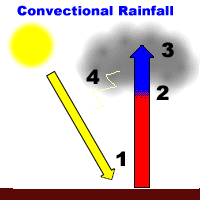
Convectional rainfall:
1. Air is warmed by the sun
2. Warm air expands as it rises
3. Cooler air condenses, forms clouds
4. Heavy rain is produced and falls

Frontal rainfall:
1. Cool, denser air of a low pressure system moves across earth’s surface
2. Warm, lighter air is forced to rise as the cold front moves in
3. Air is cooled, condenses, and can cause rain to fall

Friday, November 12, 2010

Invertebrate Revision

Invertebrates Revision
Invertebrate: Animal without a backbone

Phylum
Annelids (little rings)
-most in water, some in soil
-segmented worms
-soft-bodies
-take in air through moist skin
e.g. leech, earthworm, fanworm, ragworm

Arthropods (jointed foot)
-found in land and water
-segmented bodies
-exoskeleton
-paired and jointed legs
-most have antennae and compound eyes
-on land, breathing through spiracles (tubes)
-in water, breathing through gills
e.g. ants, crayfish, scorpion, spiders, crabs, flies, butterflies, millipedes, damselflies

Cnidarians (stinging cells)
-most live in the sea, several in fresh water
-soft, hollow bodies
-only one body opening
-tentacles with stinging cells
-no body organs such as heart and lungs
e.g coral, sea anemone, hydra, bluebottle, jellyfish

Echinoderms (spiny skin)
-found only in the sea
-spiny skin
-arms that radiate from centre of body, based on five parts
-tube feet for movement
-mouth and anus
e.g. brittle-star, sea urchin, starfish, sea cucumber

Platyhelminthes (flat worms)
-flat body
-unsegmented
-head-like region
-mouth opening but no anus
e.g. tapeworm, fluke, planarian, flatworm

Poriferans (bearing/with pores)
-found in water
-sponge body with many holes
-food and water enter through tiny holes in body
-waste goes through single large opening
-usually fixed in one place to rocks/shells
-skeleton of glassy/chalky needles or spongy fibres
e.g. bath sponges, glass sponges (all sponges)

Molluscs (soft body)
-Soft, unsegmented bodies
-usually covered with a protective shell
-head with eyes and/or tentacles
-mouth and anus
-muscular foot for movement
e.g. snail, slug, octopus, limpet, clam, squid, oyster

Nematodes (thread form)
-round worms
-found in water, soil, plants and animals
-worm-like body with no segments
-mouth and anus
e.g. threadworm, pinworm, hookworm, whipworm, lungworm

Arthropods
-There are more arthropods than any other animal types on earth
-All have external skeletons
-All have jointed body
-All have paired and jointed legs
-5 Arthropod groups:
1. Crustaceans – at least 10 legs, more than 3 body segments, 2 pair of antennae
(Crabs, shrimps, lobsters, prawns)
2. Arachnids – 8 legs, 2 body segments, 1 pair of antennae (very small)
(spiders, scorpions, ticks, mites)
3. Insects – 6 legs, 3 body segments, 1pair antennae
(butterflies, damselflies, bees, beetles, crickets, ladybirds)
4. Millipedes (diplopods) – 2 pairs of legs per segment, many segments, 1 pair antennae
5. Centipedes (chilopods) – 1 pair legs per segment, many segments, 1 pair antennae
Note: Together, millipedes and centipedes are myriapods
-There are 3 ways to classify arthropods
1. Number of legs
2. Number of antennae
3. Number of body segments

Insects
Insect Body Structure:
-Divided into 3 parts – head, thorax, abdomen
-Head = antennae, eyes, mouthparts
-Antennae, contain organs for smell and touch:
-Long and thin for touch (distance between predator/prey)
-Feathery antennae for sensitivity help pick up scents (e.g. of females)
-Have compound eyes:
-good for seeing movement, escape from predators
-housefly processes 100 images per second to help flying
-Mouths shaped depending on food and eating method
-Sap-sucking = tiny head, pointed tube
-proboscis is a long tubular structure, unrolls to reach nectar (hawk moth, butterfly)
-Sharp proboscis= piercing/sucking blood (female mosquitoes, bedbugs – barbed structure for piercing and sawing, feed before dawn >13 degrees, may take 5mins or more to extract blood meal)
-Also inject saliva containing substance that stops blood clotting
-Proboscis can be blown up (butterfly) or uncoiled using muscles (hawk moth)
-Proboscis is kept coiled at rest, and uncoiled for feeding
-Plant/wood-eating = large head, strong muscles/jaws to bite through plant tissue (grasshoppers and cockroaches have hard, sharp, chewing jaws
-Houseflies and bees lick up their food
-For all insects, mouth connects to digestive system
-Thorax = where legs and wings attach
-These are hollow with exoskeleton like main body
-All have 6 Legs
-Often spurs with sharp claws
-Strong limbs for grasping/holding prey
-Strong hind leg for jumping (grasshoppers)
- Wings important for classification:
-may be one or two pairs (2 or 4)
-may be covered with hairs, scales, have long silky fringes
-In beetle, front pair is hard and thick to protect flying wings when not in use (allows digging)
-Long narrow wings with fringes for fast, accurate flight
-Front and back pairs of wings joined by hooks to beat in unison
-Abdomen = number of segments
-At the end are reproductive organs:
-female = often includes long ovipositor (long thin tube for placing eggs)
-e.g. female wasps lay eggs in paralysed spiders/caterpillars, damselflies within plants
-Sting also located near end of abdomen
-exoskeleton of insects made of substance called chitin
-Tough, waterproof, springy
-Insects have no lungs
-Use trachea, fine tubes, between segments of exoskeleton to transport oxygen around body
-hearing organ location depend on insect, mosquito= base of antennae, cricket=front legs, butterfly=on thorax, cicada=abdomen


Insect Life-cycles

-In all insects: males produce sperm and transfer to female when mating, eggs fertilized, eggs laid near food supply
-Three options after this
1. No change or no metamorphosis
-When born, it already looks like adult, only smaller
-moults exoskeleton several times to allow room for growth
-e.g. silverfish
2. Part change or incomplete metamorphosis
-Young look like adults, but with no wings, different colour and shape
-they moult, grow, and gradually develop these
- stages are egg --> nymph --> adult
e.g. green vegetable bug, dragonfly, damselfly, grasshoppers, termites
3. Complete change or complete metamorphosis
-Four growth stages in their life cycle, e.g. the butterfly, flies, beetles, wasps, bees, ants
-female butterfly lays eggs on leaf (milkweed or swan plant)
-eggs hatch into tiny larva or caterpillar, monarch butterfly caterpillars are green and white
striped. Grow to 3cm long over a few weeks
-the caterpillar hangs by its ‘tail’ from a twig, and changes to pupa form (takes a few hours)
Case of monarch butterfly pupa is glossy green with gold spots.
-most of caterpillar body dissolves, reforms to butterfly
-internal and external differences
-case splits down the side, and the adult emerges
-stages are egg --> larva(caterpillar) --> pupa --> adult

Dichotomous Keys

-Have 2 options at each level
-When making one, the options are never the name of any category/animal
-when reading them, note down each option that lies on the path to a category/animal


Food webs and chains

-Show 2 main things: Feeding relationships and flow of energy
-Carnivore: Animal that eats other animals only
-Herbivore: Animal that eats plants only (primary consumer)
-Omnivore: Animal that eats plants and animals
-food --> consumer
-sun is the source of energy, start of all food chains
-plant = producer
-consumers come after the plants
-first order/primary consumer
-second order/secondary consumer (usually carnivore)
-third order/ tertiary consumer (usually carnivore)
-top order consumer (not eaten by any other animal on the chain)
-in food webs, plants go on the bottom and the consumers generally go in order upward, with the top order animals on top
- When considering the effects of changes, think about
-increase/decrease in predators
-increase/decrease in prey
-maintaining/disrupting balance of food
-main food sources
-increase/decrease in producers
-Remember that food chains often do not develop past three consumer levels, as energy is lost at each level. There would have to be huge amounts of lower consumers/producers to sustain a higher order consumer.

Carbon – CO2

-Plants take in carbon from atmosphere through leaves
-Carbon returned to atmosphere through respiration, decomposition, combustion
-Respiration takes place in every cell of the body
-Animals obtain carbon by consuming plants
-Burning of fossil fuels disrupt natural balance of carbon
-Skeletal remains of aquatic creatures, such as shells and bones, is the source of carbon in limestone
-limestone=calcium carbonate=CaCO3

ihearthorses

(tell me if there's anything else on the test that I have missed!)

Thursday, November 11, 2010

Hi everyone!
Test time again, but we need to take this opportunity, AND GET PIZZA (OR PASTA)
So this is revision for our music test:

Notes of the Treble and Bass clefs:


Or rather this is the grand staff


Intervals:
-Remember to count where the note already is
-Minor thirds will sound sad
-Major thirds should sound happy
-Major thirds are the first two notes of the major arpeggio


Key Signatures:
C major – no sharps or flats
A minor – no sharps or flats, raise 7th note
G major – 1 sharp, F sharp
E minor – 1 sharp, F sharp, raise 7th note
F major – 1 flat, B flat
D minor – 1 flat, B flat, raise 7th note
Remember to raise the 7th note of minor scales!

It is likely that the test will ask us to write scales, remember to consider the:
-Clef (Treble or Bass)
-Type of note (whole half, crotchet, minum etc)
-Key signature or accidentals
-Whether the stem of the note goes up or down (down until c1)

Italian Terms:

Tempo/Speed from slowest to fastest:
Lento: very slow
Adagio: slow
Adante: at a walking pace
Moderato: moderate, interpreted by performer
Allegro: fast and lively
Presto: very fast

Dynamics from softest to loudest:
Pianissimo: very softly - pp
Piano: softly - p
Mezzo Piano: moderately softly - mp
Forte: loudly - f
Mezzo Forte: moderately loudly - mf
Fortissimo: very loud - ff
Crescendo: gradually getting louder (<)
Decrescendo/Diminuendo: gradually get softer (>)

Technique:
Staccato: short and detatched
Legato - smoothly and connected
Slur/phrase mark - without breaking it apart, connected

Instruments: be able to recognise a
Flute - http://www.youtube.com/watch?v=LI3wIHFQkAk (clear, high range, airy sound)
Oboe - http://www.youtube.com/watch?v=iSsFUQs89T0 (shrill, high range, sharp sound)
Bassoon - http://www.youtube.com/watch?v=sdrTKYDgISQ (hear vibrations, lowest range)
Clarinet - http://www.youtube.com/watch?v=9CkK-LM6Oe0 (warm, mid-high range)
The song played is Fight of the Bumblebee, coolest yet hardest song ever.
And flute is the best by the way (bias? maybe...)

If there's anything else you think we might have, please comment

from ihearthorses

Thursday, September 2, 2010

GEOLOGY REVISION

GEOLOGY REVISION

Igneous: Meaning “from fire”, they are created when lava or magma cools at different rates. They contain crystal such as clear quartz, black mica and white/pink feldspar. Can be plutonic/intrusive where magma cools slowly underground, or volcanic/extrusive where they cool quickly above, often after an eruption.
-Used for decorative walls, floors, or desktops
-Eg. Pumice, Granite, Basalt, Obsidian, Gabbro

Sedimentary: Literally resembling, containing, or forming by a collection of sediments.
-3 main characteristics: No crystals, layers, grains
-Identified by layering, size and type of sediments.
-They all form underwater.
Sediments= Deposited piece of weathered rock or plant/animal remains
-Layers caused when grains/pebbles of different sizes settle at different times.
-Used for statues, paving, buildings and statues, but not as common due to acid rain wear. Polished limestone is too slippery for paving.
-Type of rock formed depends of place of formation and type of material
-Coal creates in forest floor where bottom layers are dried and temperature rises leaving coal
-Conglomerate formed in fast flowing river
-Mudstone formed in a still lake
-Limestone and coal aka biological rocks
-Eg. Breccia, Sandstone, Limestone, Shale, Mudstone, Siltstone, Gypsum, Coal, Conglomerate

Metamorphic: Meta meaning change and morphe meaning form.
Parent Rock Metamorphic Rock Main Cause of Metamorphism
Shale Slate Pressure
Limestone Marble Heat
Granite Gneiss Pressure
Sandstone Quartzite Heat
Conglomerate Metaconglomerate Heat
-Can be made of any other rock type
-Buried deep underground, change caused by heat from volcano and pressure from crust
-Used for statues, tables, roofs, slates, tiles, roads
-May be platy or flaky, distinct colour banding where minerals are squeezed into layers, distinct folding due to pressure
-Eg. Quartzite, marble, slate, schist, gneiss, Phyllite, Metaconglomerate

Weathering, Erosion:
-Sea action, wind, blasting of sand and soil, acid rain, and chemical reactions between water and ground
-Expansion of freezing water causes widening cracks which eventually break the rock
-Weathering: Where rocks are broken down into smaller pieces
-Erosion: Transportation of weathered rock
-Deposition: The weathered rock is laid down or deposited. Eg. From slowing wind or water

Rock Cycle Summary: Magma, crystallization, igneous, to weathering, erosion, deposition, to sediment, compaction and cementation, sedimentary, heat and pressure, metamorphic, melting, magma.

Layers of the earth: Crust, mantle, outer core, inner core.

Minerals: (rocks are made of minerals)
-Identified by characteristics including colour, lustre, transparency crystal system, crystal habits, cleavage, fracture, hardness, specific gravity, streak, other characteristics, associated minerals, notable occurrences, best field indicators.
-Rocks are composed of different minerals
-Most minerals contain crystals

Crystals: refer to previous revision

Monday, August 16, 2010

CuSO4 Crystals, Yum

Crystal Revision

These are COPPER SULPHATE CRYSTALS (CuSO4)

Method:

Part 1:

1. Weigh 7g of copper sulphate powder into a 250ml beaker using an electric balance
2. Collect 100ml of copper sulphate into a second beaker
3. Add 7g of copper sulphate to the solution and stir (to make solution saturated)
4. Heat beaker and stir to dissolve the solid powder (solution now supersaturated)
5. Pour the warm solution into the clean petri dish until 2/3 full and leave overnight (time is required in order for the solution to cool and solidify into crystals. The solution is now less but still supersaturated)
6. Cover the rest of a solution with a cardboard lid

Part 2:

7. Choose 2 seed crystals and place them on clean paper. (Shape/figure is more important than size as it is the template for the final crystal) Measure and draw one crystal. DO NOT TOUCH THE CRYSTAL (copper sulphate is poisonous and thus potentially harmful)
8. Tie a slip knot around the other seed crystal with cotton thread
9. Suspend the thread through the cardboard lid
10. Tip the remaining crystals back into the solution. You may need to scrape the crystals with a spatula (Crystals may have solidified onto the bottom of the dish)
11. Heat the solution until ALL of the solid has dissolved (This is increasing the saturation of the solution again)
12. COOL the solution in a shallow, cold water bath (otherwise the suspended seed crystal will melt)
13. Hang the crystal in the cool solution and leave to grow

Explanation:

As the supersaturated solution cools, the excess copper sulphate will solidify onto the seed crystal. Shape is maintained though the size will increase. Particles basically join evenly to the template as opposed to falling to the bottom of the beaker.
-Crystals grow by adding single layers of molecules at a time
-As the water cools and evaporates, the solid is forced out make these layers
-Crystal shape depends on the arrangement of atoms

Definitions:

Solution: Mixture of substance dissolved into another, solvent + solute = solution

Solvent: Does the dissolving (usually liquid, H2O)

Solute: Is dissolved (CuSO4 powder)

Unsaturated solution: Where the solution can hold more than what is dissolved into it

Saturated solution: Where the solution is holding exactly what it can. Adding excess will result in solid falling to the bottom, but solution itself remains saturated.

Supersaturated solution: Where excess solute is dissolved into the solution. It requires heat. When cooled, particles will be forced out of liquid and re-solidify.

Sunday, August 15, 2010

Geog Revision

Plate Tectonics Revision

Wegener’s continental drift theory stages:
200 million years ago - Supercontinent Pangaea, Australia touching Antarctica and Indian Asia
180 million years ago - Split into Laurasia up north and Gondwanaland south
135 million years ago - Continents began to break up, Australia attached to Antarctica
65 million years ago - Further breaking up, Australia moved north-east into isolation
Today - Current positions
50 million years later – Australia to move further north
Types of plates:

Continental Plates:
 Carry land masses, continents, above
 Some also hold oceans, but they are named after the land. Eg. North American Plate
 Made of lighter, less dense rock. Eg. Quartz and feldspar
 Normally do not subduct
Oceanic Plates:
 Carry oceans above
 May carry small land masses, islands, but named after the ocean. Eg. Pacific Plate
 Made of heavier, denser rock. Eg. Mainly basalt, (granite?)
 Tend to subduct in a collision

Important information:
-Rocks deep underground can be studied through rocks from volcanoes and by looking at seismographs or seismic waves (shifting rocks create energy)
-Deep underground, the high pressure keeps rocks solid by compacting and compacting particles (liquid takes up more space than solid)
-Middle of earth probably made of iron, as rock alone would not be able to make up the weight (measured using Cavendish balance) and magnetism of the earth which make compasses work is based on this iron core. The field of magnetism from N to S poles protect the earth from solar winds
-The middle of the earth is liquid outside and solid inner section
-Like gases, hot molten rock will rise (to form volcanoes) and cool rock will sink
-Volcanoes are created when molten rock rises through up through the crust
-When a plume of hot rock pushes through the mantle, cooler rock is forced aside causing volcanic ridges. The old crust moves aside and magma fills the gap to develop new crust
-Positions on the edge of a plate are more tectonically active. Australia is in centre so it is not
-A normal fault is where rocks are pulled apart and one side drops down
-Large faults can cause earthquakes
-Folding and breaking of rocks plus grinding of one plate under another can cause earthquakes to occur
-When rocks break and slip, earthquakes can occur
-Trench is a long narrow valley on the ocean floor
-Subduction is the action of a plate (usually oceanic) sliding beneath another plate upon collision
-When an oceanic plate subducts and causes an earthquake, a tsunami can also occur
-Subduction zone is the area where a plate subducts
-Plates are constantly on the move, they move at a rate of 5 to 15cm per year

Convection Currents:
This is the heat-driven motion that causes plates to move and rocks to travel in a circular motion within the earth. They are within the mantle
Currents moving away from each other = diverging = crust pulled apart
Currents moving toward each other = converging = crush pushed together

Plate Boundaries:

1. Divergent/Constructive Boundary
-Movement of plates away from each other
-Plates can be oceanic or continental
-Gap caused called a rift or ridge
-Magma fills rift, volcano formed
-New crust created
-e.g. Mt Kilimanjaro, East African Rift, Mid-Atlantic Rift, Iceland

2. Convergent/Collision/Destructive Boundary

-Plates move toward each other
-Ocean to continent = oceanic crust subducts and melts, land on continental crust folds upward, volcano and rift forms. E.g. Mt St Helens, USA

-Ocean to ocean = one piece of crust subducts and melts, volcano (underwater) and trench forms. E.g. Japan, Indonesia, Caribbean Islands, Philippines (island arcs)

-Continent to continent = none or very little subduction occurs; continents on top of the plates collide and fold upwards to form mountains. E.g. Himalayas (Indian and Eurasian Plates), Andes (fold mountains?)

3. Transform/Conservative Boundary
-Plates slide alongside each other
-Can be oceanic or continental
-May move in the same or opposite direction
-Causes a fault e.g. Sand Andrea Fault, California (Pacific and North American Plates)

Helpful sites:
http://geology.com/nsta/convergent-plate-boundaries.shtml
http://www.waterencyclopedia.com/Oc-Po/Plate-Tectonics.html

Friday, August 6, 2010

Maths Tests

Hello everybody!

Unless you were sick, away, at strings, or extremely lucky, you have probably had a maths test today. It was on linear graphs; a topic which appeared to be of a quarter science, a quarter finance, a quarter maths and the rest was dot-to-dot. I’m not sure about you, but I didn’t go too well. At any rate, it has inspired this post on:

MATHS TESTS

Okay, firstly here’s a joke:
Q: How many legs does an octopus have?
A: Eight
This one was courtesy of year 5 maths. It does make you wonder, who makes these maths worksheets?

But back to the point, maths tests can be exceedingly stressful experiences, but with the right steps, they could become mildly acceptable. Enjoyable even. And then again, maybe not…

Firstly though, it’s very important to realise that although maths tests can’t technically be studied for and certainly can’t be crammed for, it is possible to study for maths. It’s very much like what the language teachers say, “a little every day”. If you do, maybe one or two questions every single day, you’ll eventually find that you can do them much more efficiently and easily.

Another integral aspect of maths tests are the point allocation. You need to know what your strengths are:

1. You’re better at the skills section. In this case, by all means work the test out in order. It gives you time to perfect the skills and thus get a better mark. However, despite having less time for skills, doing analysis first would give you more opportunity to do well on this section, especially since it is usually worth more marks.

2. You’re more analysis oriented. Here, it would be ideal to do the analysis section first. It is often worth more marks, and you will have a more relaxing end to the test.

Contrary to belief, people often think analysis is harder. Teachers think that we think it’s harder too, meaning they often make numbers more convenient. The important thing with analysis is:
1. Show working out, if not for the teacher at least for yourself
2. Check everything carefully
3. If the answer is an unusual fraction, check it even more carefully
4. Draw diagrams
5. Label and USE the diagrams

Personally, I often find that skills can sometime be more difficult. They use weird numbers resulting in strange answers, so it’s difficult to tell whether you are correct or not without re-doing the whole question. Also, generally working out will not earn you any points, so careless errors are very easy to make.
Finally, I will sum this up with my top tips for maths tests:
1. Check if your teacher prefers pen or pencil
2. Show all working
3. If there is a sentence question, use a sentence answer
4. Draw and use diagrams where appropriate
5. Check everything
6. Read all questions before starting, it often calms me down
7. Revise by doing a little very often
8. Watch the time
9. If you are struggling, move on and answer it later, but don’t leave any blanks
10. My personal top tip from today’s experience: Don’t stab yourself with lead pacers where the lead may get stuck in your finger. It not only creates frightening stains on your test, but it also wastes between 10-20mins of time.

Anyway, happy testing! Or not…

ihearthorses

Friday, July 30, 2010

Homework, Sigh

So if you check this blog regularly, which is very nice of you so thanks, you may have realised a massive gap between my last post and this one. That’s quite easily explainable; Homework Overload. Yes, it’s very much the same as last term, about six million assignments due every single day, maths test every week (such as next Friday) and whole tree’s worth of sheets and notes. I bet our school is a danger to the environment, but more importantly, I’ve decided to dedicate this post to:

HOMEWORK TIPS:

1. So to start, you need to identify what category your homework tasks fall into. Don’t worry, it doesn’t take a genius. There are only two categories: Long term, and short term.
Long term work includes: Projects, work taking over 1 week or 10hrs, all assignments, making posters, presentation preparation, research, and studying for tests,
Short term work includes: Worksheets, work with generally only 1 element, maths sums, short written works, essays, anything else that can be done or is due within a night or two.
Now that you know that, we can move on. Short-term work generally comes first for me, and is done in order of being due, then importance. Short-term homework shouldn’t take too long, but don’t skim over it either. Nicely done small tasks will make you appear ‘good’. On the other hand, long-term tasks need to be completely bit by bit, usually after short-term. Do something every day until you finish. It’s helpful to set an ‘at least time’, so you have a minimum amount of time allocated to the task. No maximum is really required, because if you get carried away you’ll end up finishing it faster.

2. Everyone needs priorities, so this is my order of importance: Food, water and oxygen (most important, obviously), compulsory or best ever activities (such as school or horse-riding), homework, optional activities, sleep. Okay, this probably won’t be the same as yours, and you might be thinking, sleep? I thought that was important. YES, sleeping is important, but when you have major geography tasks due the next day, you just can’t help but do it until one in the morning when you begin to think that you’ll either pass out or sleep over your computer (Not doing that again).
Anyway, my point is, list your priorities, rethink them, then think them again, and then do things accordingly. For example, sleep is probably a tad higher on my list.

3. Exceptions to the ‘always do homework’ rule is when the work is:

Useless repetition: Maths is a great example, over 100 questions each time of exactly the same thing over and over again can be tedious and pointless. It can be great practice, but if you know the work well, just do as much as you can. I usually use the abcdhlquyz method. It basically means do a few question, skip a few, and do some more.

Way too hard: In this case, try to do what you can, but ask a friend, sibling, parent, or nice teacher to help you. If you’re going to try using the teacher who set you the work, it would probably be good to email them or something beforehand, so if they say “why didn’t you tell me this earlier”, you can say, “I did”. Haha, or maybe not…

Set by a teacher who neither checks it nor cares: Probably not possible in most classes, but anyway, you should do the work though perhaps a bit lower on the priorities list.

So I’m not so good with homework, I just do it as soon as I get it and then hand it in. Seriously though, get it over with, and whatever you do afterward is heaps more fun. If you have anything to add, any 'sick' (haha, you know what I mean) tips, please comment!

ihearthorses

Thursday, July 22, 2010

Chemistry Revision

Sorry this is super super super late, but here is the...

CHEMISTRY REVISION

How to safely handle acids and bases:
-Acids are corrosive, and therefore potentially dangerous
-Strong bases can also be harmful as they are caustic
-Do not combine unknown acids or bases
-Only work under supervision
-Immediately report any spills
-Do not consume any unknown substances
-Always wear safety glasses coats
-Dispose of substances as directed, not directly down the sink
-Keep away from flames unless directed

Chemical and Physical Changes:
Physical Chemical
Change of state Chemical reaction occurs
Reversible Irreversible (or difficult to do so)
Substances stay the same Form a new substance
1. Water freezing to ice 1. Some metal rusts or tarnishes
2. Dissolving sugar in water 2. Cooking
3. Melting gold 3. Vinegar and sodium bicarbonate bubbles
4. A piece of chalk is ground to dust 4. Sugar in grapes ferments
5. Glass breaks 5. Wood burns to form ash

Properties of Acids and Bases:
Acids Bases
Taste sour Taste bitter
Are corrosive Are caustic
Reacts with some metals = hydrogen React with oil so feel slippery to touch
Turn litmus red Turn litmus blue
pH is less than 7 pH is more than 7

Examples of Acids and Bases:
-Hydrochloric acid: HCl
-Sulphuric Acid: H2SO4
-Nitric Acid: HNO3
-Acetic Acid: HC2H3O2
-Sodium Hydroxide: NaOH
-Potassium Hydroxide: KOH
-Calcium Hydroxide: Ca(OH)2
-Magnesium Hydroxide: Mg(OH)2

The Use and Example of Indicators:
Indicators are used to determine whether a substance is acidic, basic (alkaline), neutral. However, the following indicators do not indicate the strength of the acid or base.

Indicator Colour in Acid Colour in Neutral Colour in Base/Alkali
Methyl Orange Reddish Orange Yellowish Yellow
Litmus (lichens) Red Green Blue
Bromothymol Blue Yellow Yellow Bluish purple
Phenolphthalein Colourless Colourless Pink
Red Wine Red Red Green
Red Cabbage Juice Red Blue Yellow
*Alkalis are bases that are soluble in water

The pH Scale and What the Numbers Indicate in Terms of Acid or Base:
-The pH scale is used the measure the strength of an acid or base
-A pH of less than 7 indicates that the substance is an acid
-A pH of more than 7 indicates that the substance is a base
-If the pH is 7, the substance is considered to be neutral – neither acid nor base
-Strong Acid: 0-3, HCl, H2SO4, HNO3
-Weak Acid: 3-7, vinegar, citric acid
-Weak Base: 7-11, Baking Soda, bicarbonate of soda
-Strong Base: 11-14, KOH, NaOH
-Universal indicator is added to substance, the colour degrees can be matched and interpreted.

Reactions of Acids and Bases:
(Reactants → Products)
1. Neutralisation: Acid + Base → Salt + Water
e.g HCl + NaOH → NaCl + H2O
2. Acid + Metal carbonate → Salt + Water + Carbon Dioxide
e.g 2HCl + CaCO3 → CaCl2 + H2O + CO2
3. Acid + Reactive metal → Salt + Hydrogen gas
e.g 2HCl + Mg → MgCl2 + H2
*Salt is a solution, so the state symbol is (aq) for aqueous. Others are (s), (l), (g)
**Test for CO2 is bubbled through limewater, hydrogen is ‘pop’ test

Interpret and Analyse Data Related to pH and acid-base:
-Remember not to put too much universal indicator
-Cloudy result means solid is made
-Bubbles or fizzing means gas is made
-In the chemical symbols, H at the beginning usually indicates an acid, and an OH at the end usually indicates a base

Acid Rain – What it is, Causes, Problems, Solutions:
- Definition:
Acid rain is any form of precipitation, such as rain or snow, which has been polluted by acids.
- Causes:
Acid rain is caused when water vapour in the air reacts with chemical compounds given off by cars, factories, and power plants (burn fossil fuels). These chemicals include Sulphur and nitrogen oxides which form into sulphuric and nitric acids.
*Carbon dioxide, which is naturally present in air, dissolves in rainwater to form a light acid
- Problems:
Acid rain directly attacks leaves and needles of plants which prevent photosynthesis. It also soaks into soil which affects chemical balance, damaging plants and crops. It can run off into rivers and lakes polluting drinking water and killing aquatic life. Acid rain also attacks stonework including buildings and statues.
- Solutions:
1. Decrease fossil fuel usage so as to limit sulphur and nitrogen compounds in the air. Find other, renewable energy sources.
2. Lime can be added to lakes in order to neutralise the acid rain.
3. Smokestacks, high tower-like chimneys, reduce local air pollution, but transfer the issue elsewhere.

Antacids in the Treatment of Indigestion:
-Your stomach contains hydrochloric acid which assists in food digestion
-When it becomes too acidic, it causes a burning feeling called indigestion
-Treatment is to take an antacid powder or tablet
-The antacid contains a base which neutralises excess acid in the stomach and relieves the pain
-Salt and water is produced
-Common antacid is milk of magnesia
-Consists of solid base, magnesium oxide suspended in water
-The base neutralises the hydrochloric acid in your stomach
magnesium oxide base + hydrochloric acid → magnesium chloride salt + water

COPYRIGHT 2010 ihearthorses

Monday, July 19, 2010

My History Essay

Hey, if any of you people out there are actually interested, here is my history essay:

ESSAY PLAN: DID RICHARD III KILL THE PRINCES?

Introduction:
Surrounded by much controversy and mystery, the question as to whether Richard III murdered the princes in the tower is one that has remained unanswered throughout history. As with any other case, there are numerous views on this particular matter. In my personal opinion though, Richard III did not kill the princes.

Paragraph 1:
To begin with, there are many pieces of evidence which depict Richard as being a devoted brother, uncle, and ruler. During the War of the Roses, by following Edward into exile, and fighting alongside him in the battles of Barnet and Tewkesbury, Richard proved his loyalty. His affection and sense of protection toward the princes may have been the cause of his failure to bring them out in public upon request. Despite the first written account of this matter being thoroughly against him, the quote, ‘he would neuer putte them to death’, quite clearly states the unlikelihood of his being the murderer. The postcards in the Battlefield Church are also proof of his fair rulings, with praise for his bravery, loyalty, and worthiness.

Paragraph 2:
Furthermore, during the Tudor’s reign, Richard was, naturally, portrayed as a villainous character with many documents supporting him destroyed, hence making later evidence likely to be biased. Due to the lack of available facts, Shakespeare’s play, ‘Richard III’, and Thomas More’s work, ‘History of King Richard III’, were largely sourced from John Morton. However, Morton himself had a low opinion of Richard III due to the fact that he had been imprisoned by Richard for treason. Therefore, these heavily biased works may have severely influenced later accounts and opinions. This effect is shown through the altered portrait of Richard III whose lips, eyes and shoulder had been modified to make him appear to be the sinister hunchback that he was not.

Paragraph 3:
Finally, there are also numerous other convincing outcomes and suspects apart from Richard III. One key suspect is Henry Tudor, whose claim to the throne was not only exceedingly unconvincing, but he did not mention the princes until over a year after Richard’s death. If alive, the princes would have been a great embarrassment to the Tudors. Another suspect is Henry Stafford, the Duke of Buckingham. While he appeared to support Richard, it was suspected that he may have been secretly assisting the Tudors. In this case, the princes’ deaths would have been of benefit. Another possible outcome was that the princes’ had in fact survived, as although their mother, Elizabeth Woodville, fought for their legitimacy, she never mentioned that they had been murdered.

Conclusion:
In conclusion, the disappearance of the princes in the tower is of high significance and mystery in history. There are many pieces of evidence which prove Richard III’s innocence, including that he had a fine personality, much of the evidence against him was biased due to the Tudor reign, and that there were numerous other likely suspects and outcomes. Therefore, the convincing evidence leads me to strongly believe that Richard III did not kill the princes.

COPYRIGHT 2010 ihearthorse

Friday, July 16, 2010

Timed Essays

Hi everyone!

Now that school’s finally started up again, I can finally post stuff to help (or entertain) anyone who might read this blog. So, seeing as I’m in the mood after that EPIC 50min history essay on ‘Did Richard III Kill the Princes’ which I really don’t care about anyway, this post is going to be all about:

HOW TO HANDLE A TIMED ESSAY

Okay, I have to admit I’m really bad with anything that’s ‘timed’. Even in those games where the clock counts up, I get really stressed and freak out and quit the game, but unfortunately, chances are that’s not going to work in essays.

Firstly, you have to get over the fact that the time is ticking. Don’t write too quickly, and think about what you’re writing before you write it, so even if you run out of time to re-read, it shouldn’t be too bad.

Also, it always helps to know what you’re writing before-hand. If it’s a story, consider several plotlines and choose one that best fits the situation. Using dreams to end stories are NOT GOOD, as it shows you have not planned your time. However, it is better than nothing so you be the judge… Other essays can be a bit trickier to plan, unless you know the topic. If so, then write out the essay the night before, memorise it (I have a really good short-term memory but if you can’t, just try get the main points…) and write away when it’s time.

That brings me to re-reading. I know all the teachers go “re-read, re-read, re-read”, but it really depends on the type of person:
1. You are always careful when you write, rarely making silly errors, and you write slowly:
For you, I think it’s not all that important. I mean yes, by all means re-read it and check it over and over if you have time to spare, but if you’re going to cut short a good story or essay just to re-read it, then you might want to reconsider… After all, one or two small things won’t make much difference

2. You often make silly mistakes in your writing and you write very quickly:
If you’re this type of person, then the best thing you can do is RE-READ, EDIT, and RE-READ AGAIN! As long as you do that, you should be fine with most grammatical issues. But what’s that you say? You can never find spelling mistakes because they are forever playing hide and seek with you, or you just can’t remember what that silly word looks like? Simple: If you can’t find the error and have plenty of time, read the essay backwards. So instead of ‘I really like horses’ read ‘horses like really I’. You generally miss these spelling errors because your brain is focussing on something else. Reading backwards means there’s only one thing to concentrate on anyway. And if you can’t remember a single word, REPLACE IT, there are over 750 000 000 words, surely there’s one you can use instead.

3. You write quickly and accurately:
If this is you, I don’t know why you are reading this blog. Maybe you could stare out the window or something? More seriously though, if you can actually write quickly without mistakes then maybe you could expand on your ideas. Add more information, more adjectives, make improvements. I follow the improvements=((minutes remaining)/5) equation. (Okay, I may have made that up on the spot, but it does work) So you divide the amount of time after you have completed the whole essay by 5, and then make that many improvements. After you’ve done that, by all means stare out the window.

4. You write slowly and often make errors:
Okay, the only thing for you is to improve one or the other. To write quicker, write more. Yup, that’s the only way to do it. Try to see how many times you can write ‘I love horses because horses are the absolute best things ever!’ in a minute (or a sentence of your choice). While watching television, it helps if you just keep writing, for 30-50mins straight. Or, even better, be in my maths class, where we have to write and draw for 45mins straight anyway. Great practice, right?

Top Tips for Timed Essay Writing:
1. Plan and allocate time for what you are writing before-hand
2. Ignore the time while writing
3. Consider the time after writing
4. If time allows, re-read, edit, and then stare out of the window (jokes)
5. Make improvements using the improvements=((minutes remaining)/5) method

Happy writing!!
ihearthorses


PS. I’ve probably missed heaps of important stuff because I just wrote this quickly due to apparent ‘high demand’. Please comment and I can add more.
PPS. I’ll post my history essay soon, please note that all work on here is COPYRIGHT!